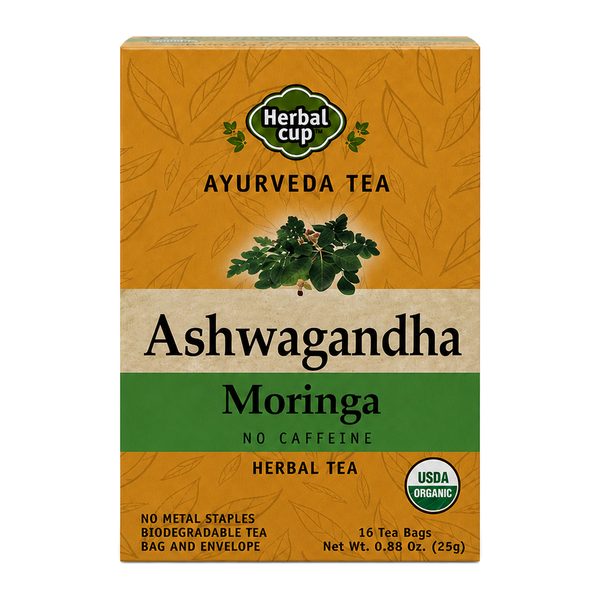
Root from the earth, leaf from the sky: our organic ashwagandha moringa tea pairs desert-grown ashwagandha root from Rajasthan with grassy, slightly nutty moringa leaf, plus ginger, hibiscus and rosehips. Caffeine-free, USDA Organic and blended in California, it's a slow-steeped, earthy morning cup.
Why We Blend Ashwagandha Root with Moringa Leaf
Many herbal teas give you one thing. A single note. A single ingredient doing a single job. This blend was built around a different idea entirely.
Our founder studied Ayurvedic formulation for decades, and one principle kept coming back: a good blend draws on more than one part of the plant — not just the root, not just the leaf, but both in the same cup. Ashwagandha is a root. It grows underground in the arid desert of Rajasthan, India, where the dry desert soil forces the root to become dense and hard. Moringa is a leaf. It grows high on the Moringa oleifera tree, on organic farms under open sun, and its leaves have been eaten as food across Africa and South Asia for thousands of years.
One draws from below the earth. The other reaches above it. In Ayurvedic tradition, ashwagandha is often paired with other botanicals to create more complete, more rounded blends. Moringa is a natural complement — the leafy brightness to ashwagandha's deep, grounding earthiness.
Ginger adds warmth, hibiscus brings a tart berry note, and rosehips round the finish with a gentle sweetness. Five ingredients. Nothing unnecessary. Root and leaf, earth and sky, in one cup.
What Ashwagandha Moringa Tea Tastes Like
🌿 First sip: A smooth, green, slightly grassy note from the moringa leaf — clean and fresh, with a nutty undertone 🌍 Mid-palate: Ashwagandha's deep, rooty earthiness rises underneath, grounded and warm, with a gentle ginger heat building through the middle 🌺 Finish: Hibiscus tartness lifts the cup at the end — a light berry tang softened by the subtle sweetness of rosehips
Tasting notes: nutty-herbal, green-earthy, warm ginger, light berry tartness, clean finish
Favorite add-ins:
- Honey — rounds out the earthiness beautifully and brings the berry notes forward
- A squeeze of lemon — brightens the green, leafy character
- A splash of oat milk — for a creamier, rounder morning cup
- Fresh ginger slices — doubles down on the warmth
Our founder's recommendation: Enjoy it warm. Let the roots and leaves speak for themselves — this is not a tea that needs to be dressed up.
How to Brew Moringa Ashwagandha Tea
Standard cup: Pour freshly boiled water (200–212°F) over one tea bag. Steep 7–10 minutes. This blend rewards patience — the moringa and ashwagandha release their full character over time. Gently press the tea bag with a spoon before removing.
Stronger brew: Use two bags or steep 12–15 minutes. This blend does not turn harsh with a longer steep — it only gets deeper and more complex. Press and squeeze the bags thoroughly.
Founder's morning pot: Brew a large pot of Ashwagandha Moringa together with Maca Ashwagandha, let it steep fully, then pour it into a glass container and keep it in the fridge. Each morning, warm a cup. Two of our root-based blends in one pot, and the way our founder recommends enjoying them.
Iced moringa tea: Brew two bags in a small amount of hot water for 10 minutes. Pour over a full glass of ice, add a drizzle of honey and a squeeze of lemon. The moringa's green freshness makes this surprisingly refreshing cold.
Best enjoyed: Morning or afternoon, on its own or in a pot with another Herbal Cup blend.
What Makes This Tea Different
| Herbal Cup | Typical Moringa or Ashwagandha Tea | |
|---|---|---|
| Root and leaf philosophy | Root (ashwagandha) + leaf (moringa) together | Varies by brand |
| Ashwagandha source | Desert-grown, Rajasthan, India — dense, aromatic root | Not always disclosed |
| Moringa source | Organic farms, whole leaf | Varies by brand |
| Supporting botanicals | Ginger, hibiscus, rosehips | Varies by brand |
| Ingredient count | 5 — nothing unnecessary | Varies by brand |
| Tea bags | Compostable Abaca hemp | Varies by brand |
| Certification | USDA Organic + CCOF | Varies |
| Staples | None — fully compostable | Varies by brand |
Details
- Type: Herbal tea (naturally caffeine-free)
- Tea bags: 16 per box
- Ingredients: Organic Ashwagandha Root, Organic Moringa Leaves, Organic Ginger Root, Organic Hibiscus Flowers, Organic Rosehips
- Certifications: USDA Organic, CCOF Certified
- Tea bag material: Compostable Abaca hemp, no metal staples
- Blended in: California, USA, in an FDA-registered facility
- Key sourcing: Ashwagandha root from the desert of Rajasthan, India; moringa leaves from organic farms
- Botanical notes: Ashwagandha (Withania somnifera) — known as the "king of herbs" in Ayurvedic tradition. Moringa (Moringa oleifera) — a tree whose leaves have been eaten as food across Africa and South Asia for thousands of years.
Caution: Consult a health care provider prior to use. Do not use if pregnant or nursing, when you have a medical condition, or if you are using prescription drugs.
Frequently Asked Questions
What does Moringa Ashwagandha Tea taste like? Smooth and nutty-herbal, with a clean "green" character from the moringa leaves and a deep, grounding earthiness from the ashwagandha root. Ginger adds gentle warmth through the middle, and hibiscus provides a light berry-like tartness at the finish. Rosehips soften the close with a subtle natural sweetness. It is balanced and approachable — less intense than our Maca Ashwagandha, with more leafy freshness.
Is this a moringa and ashwagandha tea? Yes — it's an organic ashwagandha moringa tea: ashwagandha root, moringa leaf, ginger, hibiscus and rosehips, caffeine-free and USDA Organic.
Is this tea caffeine-free? Is it a green tea? It is caffeine-free. Moringa is a green leaf, but this is not a green tea: there are no tea leaves (Camellia sinensis) in the blend. It's 100% herbal, so it suits morning, afternoon, or evening.
What is the "root and leaf" philosophy behind this blend? In Ayurvedic tradition, blends often draw on different parts of the plant. This blend pairs ashwagandha — a root that grows underground in dry desert soil — with moringa — a leaf that grows high on the tree in open sunlight. Root and leaf together, earth and sky, in one cup. It is a philosophical approach to blending, not a medical claim.
Where do the ashwagandha and moringa come from? Our ashwagandha is desert-grown in Rajasthan, India, where the dry soil produces a dense, aromatic root. Our moringa leaf comes from organic farms, grown under open sun.
How should I brew this tea for the best flavor? Steep one tea bag in freshly boiled water for 7–10 minutes. For a fuller cup, steep longer or use two bags — this blend gets deeper with time. Press the tea bag gently before removing to release the full flavor. Best enjoyed warm, with or without honey.
Founder's Note
"One is a root, one is a leaf. So when you drink this tea, you are incorporating the whole plant — from the earth to the tree. The ashwagandha comes from the desert of Rajasthan, where the root becomes very hard, very dense. The moringa comes from organic farms. In Ayurvedic tradition, ashwagandha is often paired with other botanicals, and moringa is a wonderful partner — the leaf complements the root. That is the philosophy behind this blend. Root and leaf. Earth and sky." — Founder of Herbal Cup Tea
Related Ashwagandha & Moringa Teas
Love the root + leaf philosophy? Try these next:
- Maca Ashwagandha — our founder's recommended morning partner for this blend, maca root alongside the same desert-grown ashwagandha
- Anti-Stress Ashwagandha — one of our best sellers, the same root with chamomile and lavender
- Turmeric Cinnamon Moringa — moringa with turmeric and cinnamon in a golden, cinnamon-sweet cup
- Turmeric Ginger Moringa — moringa with our signature 5.5% curcumin turmeric
Explore the collection:
- Herbal Teas — browse the rest of our herbal blends
Important Information
*These statements have not been evaluated by the Food and Drug Administration. This product is not intended to diagnose, treat, cure, or prevent any disease.
* These statements have not been evaluated by the Food and Drug Administration. These products are not intended to diagnose, treat, cure, or prevent any disease.

You May Also Like